3 Jun 2020
Associate Professor Chris Wilkins and Khylee Quince, AUT law professor, debate legalising cannabis as an opportunity to control the out of control drug [Television]. 1News, Breakfast, 03 June, 2020.
Watch video here.


Associate Professor Chris Wilkins and Khylee Quince, AUT law professor, debate legalising cannabis as an opportunity to control the out of control drug [Television]. 1News, Breakfast, 03 June, 2020.
Watch video here.

New Zealand has won international praise for its strict lockdown conditions and public health response to COVID-19, but there’s one glaring blindspot – alcohol was sold as an essential item, along with food, during New Zealand’s level 4 lockdown, even though almost half of all alcohol in New Zealand is drunk in heavy and binge drinking sessions. Sally Casswell discusses this issue in a recent Conversation article.
See more here.


As schools and businesses reopen and attention shifts to the longer-term repercussions of the COVID-19 pandemic, it is critical that Māori be involved in decision making more equitably than has so far happened.
The failure to include Māori in strategy discussions throughout the pandemic has already been roundly criticised, most recently over tangihanga (funeral) restrictions and the Public Health Response bill, which sets up a new legal framework for responding to COVID-19.
Māori public health specialists have repeatedly challenged a one-size-fits-all approach to pandemic recovery. There is also growing unease about who has the authority to make decisions in the best interests of Māori collectives. The sidelining of Māori as Te Tiriti (Treaty of Waitangi) partners cannot continue through our recovery and rebuild.
See more here. From The Conversation (https://theconversation.com/au)

West Auckland liquor stores have now stopped selling spirits in stores as the demand was causing people to travel far and wide for their favourite tipple.
Was demand always that high or was it exaggerated by the lockdown situation?
And what about drugs? Is there a similar demand and impact on drug usage and the illegal drug network?
Joining The AM Show to discuss this was Associate Professor in Health at Massey University, Chris Wilkins.
Watch the video.

A very successful Global Alcohol Policy Conference was held in Dublin in early March just before the Covid shutdowns.
The Minister of Health of Ireland, Simon Harris, in a rousing opening address told the conference participants of the stiff opposition from the alcohol industry he had overcome in order to pass Ireland’s new Public Health (Alcohol) Act and encouraged greater global co-operation to reduce alcohol harm. He thanked Professor Sally Casswell of Massey University College of Health for her work as chair of the International Organising Committee in bringing the conference to fruition.
Several presentations were made by staff from the SHORE & Whariki Research Centre in the conference which drew researchers, advocates and health sector officials from 47 countries, despite the looming Covid threat.
The plenary speeches are being used in a Workplace project to allow greater dissemination of presentations drawn from diverse speakers. Civil society actors and academics with an interest in alcohol policy are invited to register https://globalgapa.org/discussion2020.
Professor Casswell suggests this initiative may be a valuable rehearsal for the way international conferences will be organised in the future.
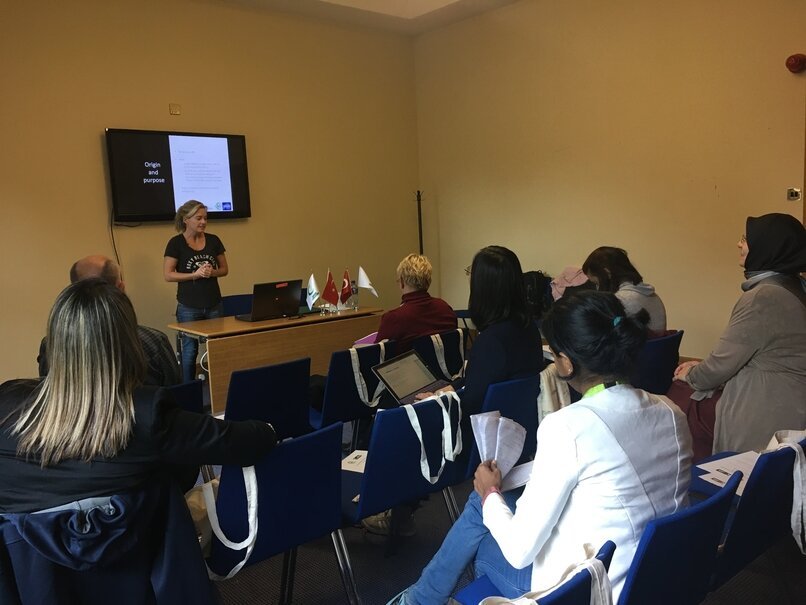
Researchers from four countries in the International Alcohol Control (IAC) study recently met in Dublin with participants in the Global Alcohol Policy conference to discuss their experiences and to encourage new countries to take part.
The group shared a number of benefits of monitoring the alcohol policy environment in each country, such as a greater understanding of local policy environments and how policies are being implemented on the ground. The team at SHORE & Whariki also demonstrated a new online tool for systematic collection of data that can be compared across countries.
To learn more or discuss joining the IAC study, email the team at SHORE & Whariki, who provide guidance and tools for the research. We would like to thank the Turkish Green Crescent Society who sponsored the Dublin event.
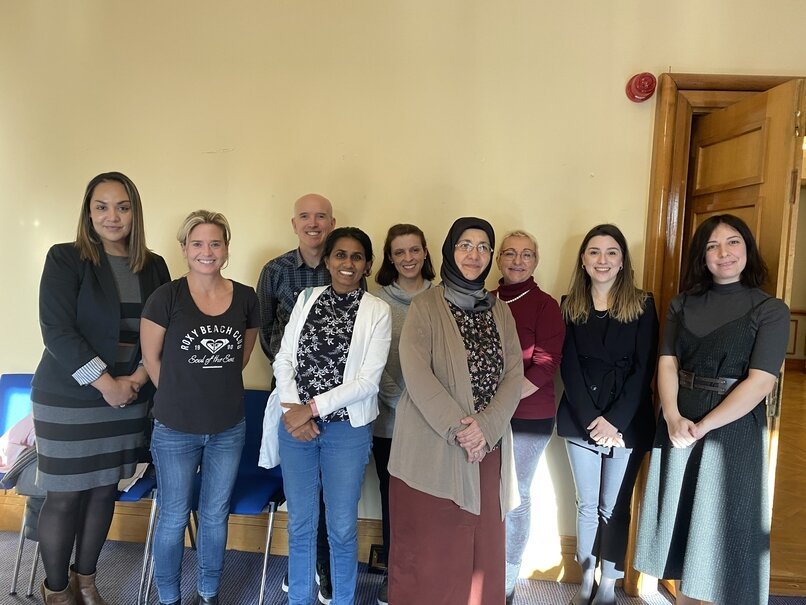
Time: Thursday March 12, 2020 – half day 13:00 - 16:00.
Open to all GAPC participants.
Venue: Bedford Hall, Dublin Castle, Dublin 2.
The International Alcohol Control Study (the IAC study) is the first ever international study of alcohol use and alcohol policy relevant behaviours. The overall objective is to measure the impacts of national or state level alcohol control policies. Two tools have been developed as part of the IAC study. One is a general population survey of alcohol consumption and policy relevant behaviour. The second is the Alcohol Environment Protocol (AEP) which provides an online tool to document legislation and impact on the ground of alcohol policies. This latter tool provides a relatively inexpensive way for countries to monitor policy change over time and compare their alcohol policy status with other countries.
The side event aims to present an overview of the findings of the IAC study and discuss their use as evidence to support advocacy for policy change.

In an interview on Newshub, Associate Professor Chris Wilkins explained the reasons behind the reduction in convictions for cannabis-related crimes reported by the Ministry of Justice. Along with a change in police attitudes toward arresting cannabis users, another driver for the decrease in cannabis arrests has been the increasing popularity of harder drugs – especially methamphetamine.

Professor Sally Casswell is seen presenting the results of a week-long assessment reviewing Thailand’s alcohol control policy at Government House, to Dr Satit Pitutecha, Deputy Minister of Public Health, accompanied by high-level executives and the National Alcohol Policy Committee. She headed up an international assessment team which consisted of experts from 6 countries, Thailand's national-level experts, and a representative of the World Health Organization. The assessment was conducted from 20 to 24 January 2020, with visits to 3 Provinces - Chiang Mai and Songkhla Provinces and Bangkok - to observe the local contexts. The assessment was made as part of Thailand’s Joint Assessment Mission to Review Alcohol Control Policy and Strategy initiative, with the goal to review the outcomes of alcohol control policy from 2008 to the present.
See more details here.
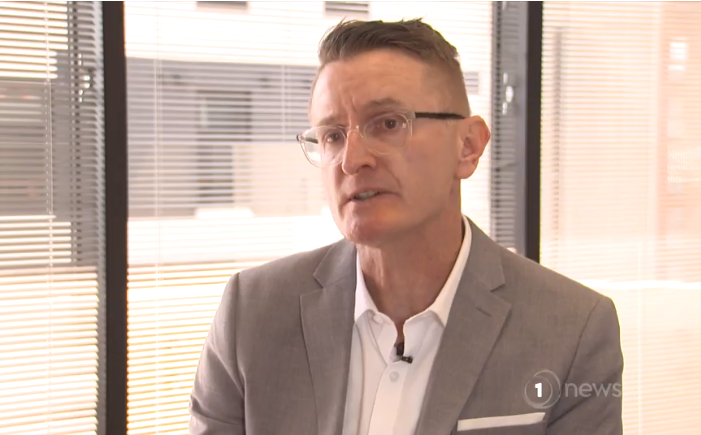
“The Government has left voters in the dark ahead of this year's cannabis referendum, according to New Zealand's leading drug academic.
Chris Wilkins says we’re lagging behind the likes of Australia and Canada when it comes to measuring the effect of drugs on society. “
See more detail here.

An opinion piece by Professor Sally Casswell entitled ‘Beware the influence of vested interests' input into the cannabis debate’ was published by Stuff.

New research about legal cannabis has revealed a sobering statistic. In states where recreational marijuana has been legalised, teenagers are suffering higher rates of addiction.
The study of 505,796 respondents was carried out by researchers from New York University's School of Medicine.
It compared use of the drug before and after legalisation in the US.
The proportion of people aged 12 to 17 who reported cannabis use disorder grew from 2.18 percent to 2.72 percent.
Chris Wilkins, a senior drug researcher at Massey University says the research is a "red flag".
New Zealand cannabis hospitalisations more than double in decade - Ministry of Health
Chlöe Swarbrick confident weaker drug laws won't encourage new users
Parliament passes medicinal cannabis Bill, promises regulated market and legal defence
See more details here.
Our Enabling Participation of Disabled Young People research project (funded by the Health Research Council of New Zealand) worked with disabled young people to understand the factors that enabled or constrained their everyday participation in community life. While urban environments presented many obstacles, participants reported discriminatory ableist attitudes were much more constraining than physical barriers. We collaborated with graphic artist Toby Morris on a comic which has been widely disseminated in print and online, to highlight examples of everyday ableism participants encountered. You can see it here.
Below, a series of large posters of the comic attract attention from people passing by in Symonds Street, central Auckland.


The Commonwealth has launched a regenerative climate change model combining indigenous knowledge with emerging technologies and scientific approaches to achieve sustainable development while protecting the planet. Common Earth is creating a network of projects which can be adapted and replicated in any community or country. When delegates from around the Commonwealth met in London in October, our co-design project with Wiri school children (funded through National Science Challenge’s Building Better Homes, Towns and Cities, Ko Nga wa Kainga hei whakamahorahora) was showcased as an example of regenerative development in Tāmaki Makaurau/ Auckland.

The Foundation for Alcohol Research and Education FARE have provided a recording of the public event of the KBS Advancing Public Health in International Alcohol Control meeting held in Melbourne on 3 October, where Prof Sally Casswell was a speaker.
This has now been uploaded to the FARE website and you can view it here.
The Lancet has published a Comment written by Sally Casswell to coincide with the WHO consultation process on the implementation of the global strategy to reduce harmful use of alcohol and the way forward, which will feed into the report from the Director General to the 2020 World Health Assembly. This will be the first time alcohol has appeared on the WHA agenda since the endorsement of the global strategy in 2010. The Comment argues a stronger response is required.
This short research bulletin presents preliminary findings from the second online New Zealand Drug Trends Survey (NZDTS) conducted in 2018/19 by the SHORE & Wharki Research Centre, Massey University. Download the bulletin here.

With the possibility a medicinal cannabis scheme could be up and running next year, researchers say there is still time to learn from similar schemes overseas.
In a report out on Friday morning, the experts warn legalising recreational cannabis at a similar time might undercut the market and lead to less access to safer medicinal products.
Massey University academic Marta Rychert joined The AM Show.
See more here.

Massey University is hosting a series of public lectures on cannabis policy reform in the lead-up to the national referendum cannabis law planned for next year’s general election.
Associate Professor Chris Wilkins and Dr Marta Rychert from the SHORE & Whāriki Research Centre, in collaboration with colleagues from the College of Creative Arts’ Design & Democracy Project, are bringing speakers from Australia, Belgium, Canada, the United States and Uruguay to speak about the cannabis reforms enacted in their countries in a series of lectures open to the public in Auckland, Christchurch and Wellington next month.
In addition to a public seminar being held in Wellington on 15 October, Massey University has partnered with the University of Auckland Public Policy Institute and University of Otago to bring the speakers to Auckland (October 17) and Christchurch (October 18).